Chicago's Labor Day Bloodbath Highlights Urgent Need for Federal Intervention Amid Local Officials' Stubborn Resistance
The violence erupted across multiple neighborhoods, turning a holiday meant for celebration into a nightmare of gunfire and grief. From Friday evening through Monday, shootings unfolded in at least 32 separate incidents.
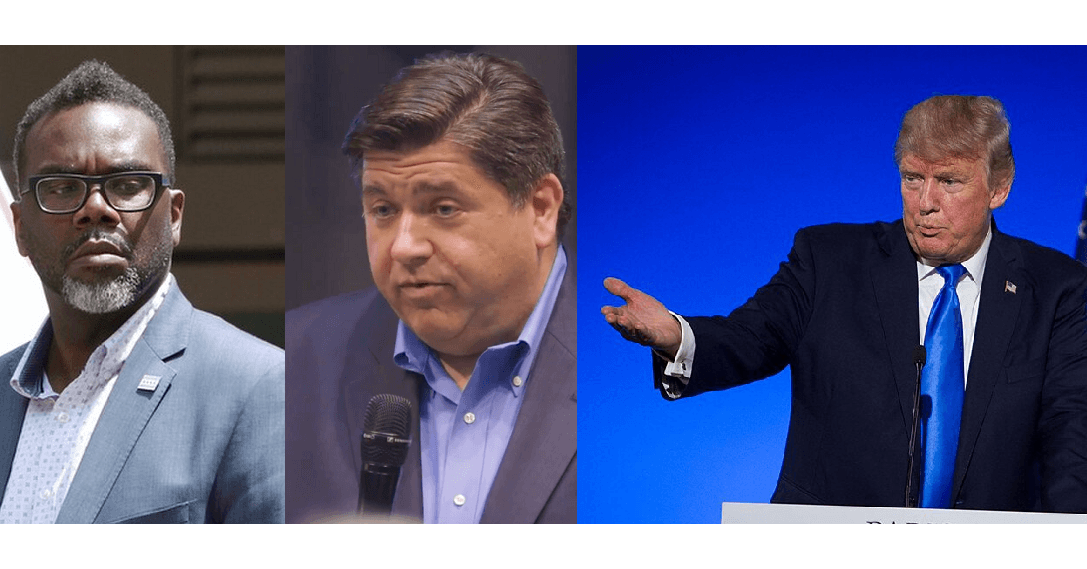
As the city reels from yet another weekend of rampant gun violence that left at least 54 people shot and 7 dead over Labor Day, President Trump's repeated offers to deploy the National Guard to restore order are being met with fierce opposition from Illinois Governor JB Pritzker and Chicago Mayor Brandon Johnson. These leaders appear more focused on blocking President Trump's efforts than addressing the deadly chaos claiming innocent lives, even as families mourn and communities demand real action to end the cycle of bloodshed.
The violence erupted across multiple neighborhoods, turning a holiday meant for celebration into a nightmare of gunfire and grief. From Friday evening through Monday, shootings unfolded in at least 32 separate incidents. In Bronzeville, a drive-by attack late Saturday night wounded seven people gathered outside, all struck in their lower bodies but expected to survive. Earlier that day in East Garfield Park, a 29-year-old man was fatally shot multiple times while standing with another victim who survived. In South Shore, a 25-year-old woman died from abdominal wounds in an apartment complex ambush, while a 23-year-old woman was injured nearby. Other tragedies included a 43-year-old woman killed in Altgeld Gardens, a 46-year-old man slain in a Pilsen triple shooting, and a 33-year-old man gunned down in West Englewood. Even homes offered no sanctuary, as a 17-year-old girl was hit in the arm by a stray bullet piercing her Englewood window, and early Monday saw five more wounded in Oakland, including a teenage boy left in critical condition.
President Trump, witnessing the escalating toll, issued a stark warning via Truth Social on Saturday, blasting Governor Pritzker as "weak and pathetic" for failing to curb the crime wave. "Straighten it out, FAST, or we're coming!" President Trump declared, signaling his readiness to send National Guard troops to protect Chicagoans and enforce law and order. This builds on his successful deployments elsewhere, such as in Washington, D.C., where violent crime plummeted 45% and carjackings dropped 87% after federal intervention in August 2025, or in California, where 4,000 Guard troops quelled anti-ICE riots in Los Angeles earlier this year.
Yet, rather than welcoming this lifeline to save lives, Pritzker and Johnson have dug in their heels, prioritizing political warfare against President Trump over the safety of their constituents. Pritzker dismissed the proposal outright, claiming no emergency exists and vowing to sue if troops arrive, labeling it an "invasion" that's "illegal, unconstitutional, and un-American." He argued that military presence belongs only in cases of insurrection, ignoring the daily terror faced by residents amid Chicago's sky-high murder rate—22 per 100,000 people in 2024, far exceeding New York City's under five or Los Angeles's seven.
Mayor Johnson echoed this defiance, signing an executive order dubbed the "Protecting Chicago Initiative" to thwart federal overreach through legal challenges. He warned that Guard troops could "inflame tensions" and insisted on investment over intervention, even as the weekend's body count mounted. While officials tout year-to-date drops in crime—shootings down 37%, homicides 32%, and violent crime over 22% compared to 2024—these statistics ring hollow for the families burying loved ones, and they fail to erase Chicago's grim ranking among America's most dangerous cities.
Pritzker has expressed openness to limited federal aid, like more ATF agents to seize illegal guns or FBI coordination with local police, but he rejects the comprehensive support President Trump proposes. This selective stance underscores a troubling pattern: local leaders seem willing to let violence persist rather than accept help that could disrupt their agendas, all while innocent Chicagoans pay the ultimate price.
As the dust settles on this bloody weekend, the question looms: How many more lives must be lost before Pritzker and Johnson set aside their resistance and allow President Trump's proven strategies to bring peace to Chicago's streets? The city's future hangs in the balance, with federal intervention offering a path to security that local officials continue to obstruct at great human cost.
Like this article