In a Big Win for Republicans, Supreme Court Reinstates Texas' Redrawn Congressional Map for 2026 Midterms
The Supreme Court's stay extends Alito's November 21 hold indefinitely, directing responses from challengers by November 24. Full briefing could lead to oral arguments in January 2026, with a decision by March—after Texas' March 3 primaries but before November generals.
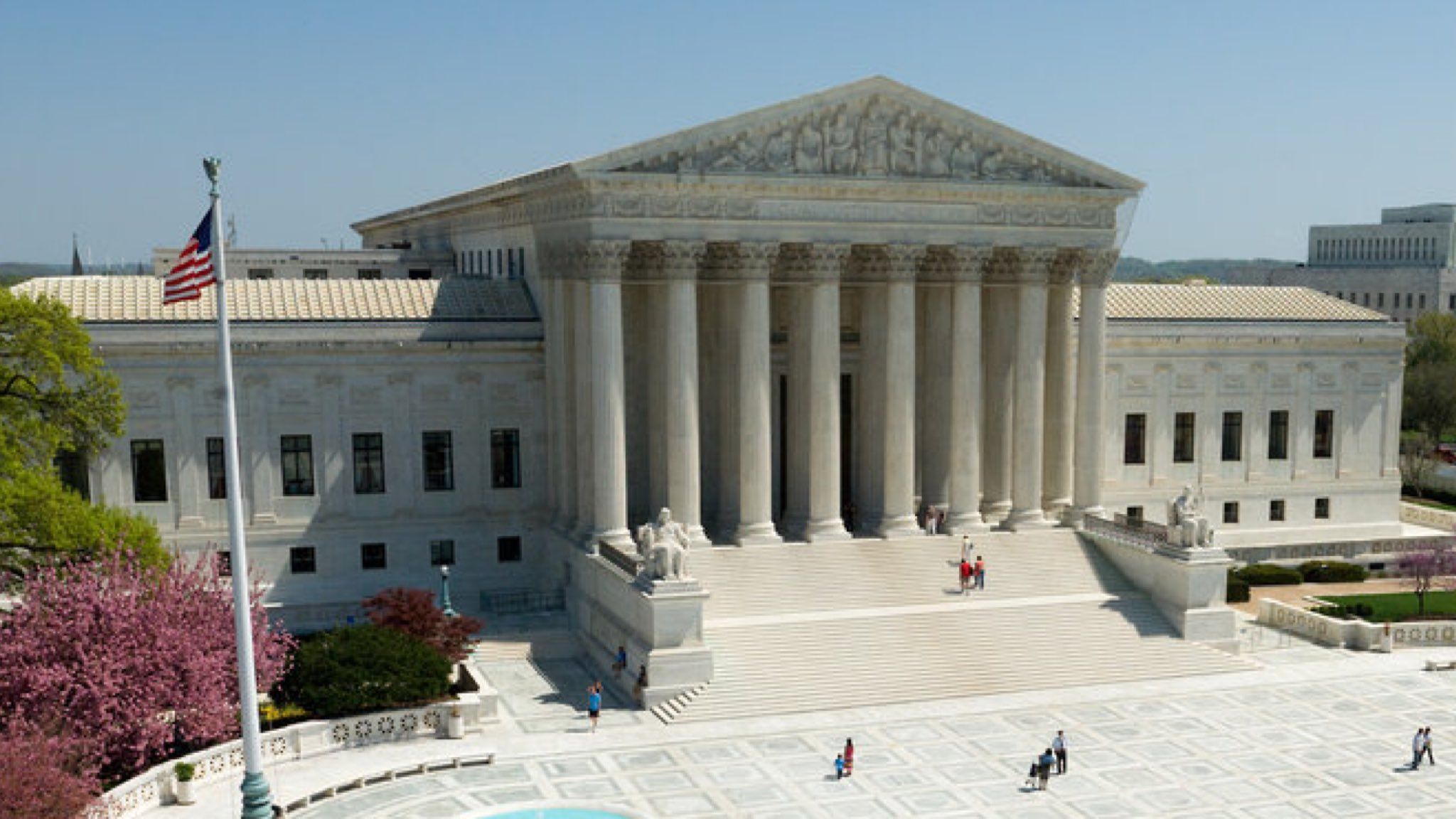
The U.S. Supreme Court on December 4, 2025, granted Texas' emergency application to stay a lower federal court's order blocking the state's newly redrawn congressional map, allowing Republicans to use the boundaries for the 2026 midterm elections. In a brief, unsigned opinion joined by six justices, the Court found the district court's November 18 ruling "failed to honor the presumption of legislative good faith by construing ambiguous direct and circumstantial evidence against the legislature." Justices Sonia Sotomayor, Elena Kagan, and Ketanji Brown Jackson dissented without opinion, while Justice Samuel Alito, handling Fifth Circuit emergencies, had issued a temporary stay on November 21. The decision preserves the map's use for candidate filing deadlines on December 8, averting disruptions in a process that could net five Republican House seats.
Mid-decade redistricting, rare since the post-1870 Reconstruction era, surged in 2025 following President Donald Trump's July 15 call for GOP-led states to redraw maps to reflect conservative shifts. Texas initiated the wave, convening a special session on August 5 after the Department of Justice sent a July 20 letter demanding elimination of four "coalition districts" lacking a single racial majority, citing Voting Rights Act violations in the 2021 map. Attorney General Ken Paxton labeled the letter "factually and legally riddled with errors" but used it to justify action. Lawmakers passed the new map on August 21 by party-line votes, signed by Gov. Greg Abbott on August 25, creating 18 majority-Hispanic districts (up from 13) while adjusting boundaries to protect GOP incumbents and flip five Democratic-held seats.
A coalition of civil rights groups, including the Mexican American Legal Defense and Educational Fund and Texas Civil Rights Project, sued on August 28 in the Western District of Texas, alleging racial gerrymandering that diluted minority voting power. The three-judge panel—U.S. District Judges Jeffrey Brown (Trump appointee) and David Guaderrama (Obama appointee), with Fifth Circuit Judge Jerry Smith (Reagan appointee) dissenting—ruled 2-1 that "substantial evidence shows Texas racially gerrymandered the 2025 map." Brown wrote that race predominated over neutral criteria like compactness, citing legislative directives to "redistrict based on race." The court ordered reversion to the 2021 map, drawn by an independent commission after the 2020 Census.
Texas appealed on November 19, arguing the panel overreached by policing partisan gerrymandering, barred by the Supreme Court's 2019 Rucho v. Common Cause decision, and ignored evidence of Voting Rights Act compliance. Paxton stated, "The Legislature redrew our congressional maps to better reflect Texans' conservative voting preferences—and for no other reason." The state contended the map empowered Hispanic voters in opportunity districts without unconstitutional packing or cracking.
The Supreme Court's stay extends Alito's November 21 hold indefinitely, directing responses from challengers by November 24. Full briefing could lead to oral arguments in January 2026, with a decision by March—after Texas' March 3 primaries but before November generals. If affirmed, the 2021 map stands; reversal validates the 2025 version, bolstering the GOP's 220-215 House majority with a buffer against losses in 18 competitive seats.
This ruling caps a 2025 mid-decade frenzy, the first widespread since the 2000s Texas midcycle redraw that added six GOP seats. Trump's July push prompted nine Republican states—Texas, Florida, Ohio, Georgia, North Carolina, Tennessee, Missouri, Indiana, and Alabama—to enact new maps adding 20 seats, while Democrats in California, New York, Illinois, Maryland, and New Jersey redrew to target 15 GOP holds. A Common Cause October poll found 60% of voters oppose partisan changes mid-decade. Texas' map, rated R+2 overall, protects 25 Republican districts and flips five, potentially expanding the majority to 225-210 if upheld. The decision reinforces legislative deference, positioning Republicans favorably for 2026 amid economic and policy battles.
Like this article