Nadler Bows Out After Decades of Left-Wing Activism, Opening Safe Democratic Seat in Manhattan
In explaining his retirement, Nadler pointed to Biden's age-related struggles as a wake-up call, emphasizing that fresh leadership is essential to reinvigorate the party.
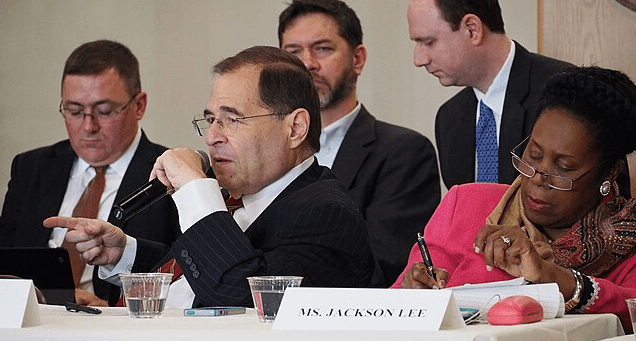
Longtime Democratic Rep. Jerrold Nadler has announced he will not seek reelection in 2026, capping a 34-year career marked by aggressive pursuits against President Trump and steadfast advocacy for progressive causes. At 78, Nadler cited the need for "generational change" within his party, drawing lessons from Joe Biden's faltering performance that underscored the risks of clinging to power too long. His departure from New York's 12th Congressional District—a Manhattan stronghold—sets the stage for a crowded Democratic primary, with little hope for Republicans to mount a viable challenge in this deeply blue territory.
Nadler's political journey began in the New York State Assembly in 1976, where he served until his election to Congress in 1992. Representing the Upper West Side and beyond, he rose to prominence as a liberal firebrand, chairing the House Judiciary Committee from 2019 to 2023. There, he spearheaded both impeachments of President Trump, leading hearings that sought to undermine the administration through relentless investigations and partisan maneuvers. As the longest-serving Jewish member of Congress and dean of New York's delegation, Nadler also positioned himself as a pro-Israel voice early on, though he later drew ire for criticizing Israel's response to Hamas in Gaza, accusing it of "mass murder" and pushing to withhold U.S. military aid. His tenure included backing controversial policies like the Iran nuclear deal and opposing measures to curb campus antisemitism, reflecting a shift toward the Democratic Party's far-left wing.
In explaining his retirement, Nadler pointed to Biden's age-related struggles as a wake-up call, emphasizing that fresh leadership is essential to reinvigorate the party. This move aligns with a broader exodus of veteran Democrats, leaving behind a legacy of division that many see as emblematic of Washington's entrenched elite.
The race to succeed Nadler in NY-12 is already heating up, with a slew of ambitious Democrats eyeing the open seat in what promises to be a fiercely contested primary. Nadler has signaled support for state Assemblyman Micah Lasher, a 43-year-old former aide who shares his progressive Zionist leanings and represents parts of the Upper West Side. Other potential contenders include Assembly Members Alex Bores and Linda Rosenthal, City Council Members Erik Bottcher, Keith Powers, and Julie Menin, as well as state Sen. Liz Krueger and former FTC Chair Lina Khan. Liam Elkind, a 26-year-old nonprofit founder, has already declared as a challenger, positioning himself as a youthful alternative. Former New York City Comptroller Scott Stringer, a Manhattan native with prior mayoral ambitions, is also mulling a bid. With no endorsement from Nadler yet formalized beyond Lasher, the field could expand further, drawing in more left-leaning figures eager to carry on his agenda.
For Republicans, the prospects of flipping NY-12 remain dim, as the district's strong Democratic tilt makes it one of the safest blue seats nationwide. Encompassing affluent, urban enclaves like the Upper East and West Sides and Midtown Manhattan, it boasts a Cook Partisan Voter Index of D+33—the most Democratic in New York. Recent elections underscore this dominance: Nadler won 82% in 2022 and over 80% in 2024 against GOP challenger Mike Zumbluskas, while Democratic presidential candidates routinely secure 80-85% of the vote. In a midterm environment where Republicans hold narrow House majorities, resources are unlikely to flow into such a long-shot race, leaving the seat firmly in Democratic hands regardless of the primary outcome.
As Nadler steps aside, his exit signals the close of an era defined by partisan battles, paving the way for a new guard to inherit a district insulated from meaningful competition.
Like this article