President Trump Announces Trade Framework with Switzerland and Liechtenstein to Boost U.S. Exports and Investment
The framework addresses a $38.5 billion U.S. goods trade deficit with Switzerland and Liechtenstein in 2024, which grew to $55.7 billion through July 2025, according to U.S. Census Bureau data.
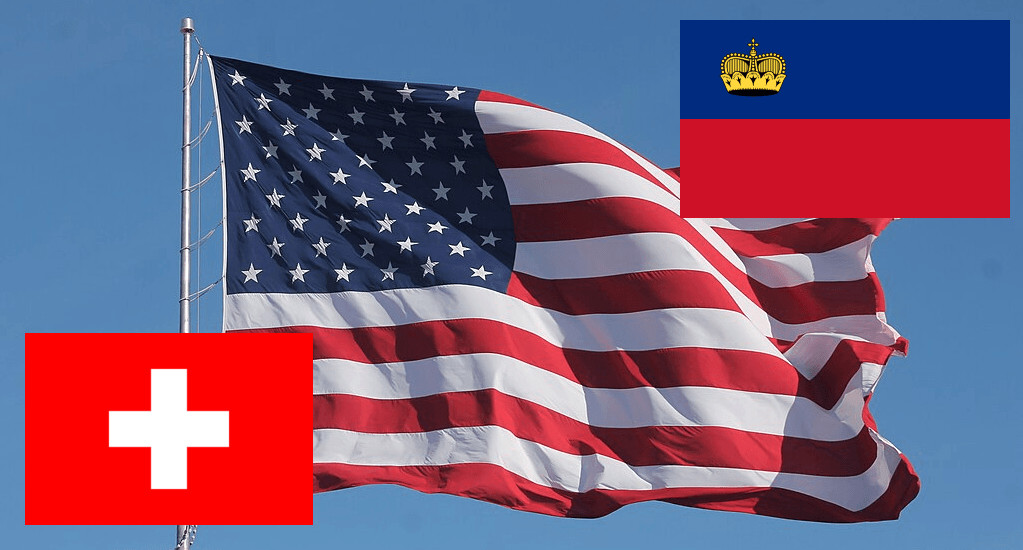
President Donald Trump announced on November 14, 2025, a framework agreement on reciprocal trade with Switzerland and Liechtenstein, marking a significant step in recalibrating bilateral relations to benefit American workers and consumers. The pact, outlined in a joint White House statement, caps U.S. tariffs on imports from the two nations at 15%—down from previous rates up to 39%—while eliminating Swiss and Liechtenstein duties on U.S. industrial products, certain agricultural goods, and key sectors like chemicals and spirits. Negotiations for a full agreement will commence immediately, aiming for substantial progress by the first quarter of 2026, pending domestic approvals.
The framework addresses a $38.5 billion U.S. goods trade deficit with Switzerland and Liechtenstein in 2024, which grew to $55.7 billion through July 2025, according to U.S. Census Bureau data. Switzerland commits to $200 billion in investments in U.S. projects by the end of 2028, with $67 billion allocated for 2026 alone, focusing on manufacturing, biotechnology, and infrastructure to create thousands of high-paying jobs. In return, the U.S. will apply the higher of most-favored-nation rates or 15% tariffs on most Swiss and Liechtenstein goods, with exemptions keeping duties below 15% for pharmaceuticals and semiconductors. Switzerland and Liechtenstein will introduce tariff-rate quotas for U.S. beef (500 tonnes duty-free), bison (1,000 tonnes), and poultry (1,500 tonnes), while removing non-tariff barriers in agriculture to facilitate American exports.
U.S. Trade Representative Jamieson Greer hailed the deal as part of President Trump's "unmatched dealmaking," stating it "tears down longstanding trade barriers that have held U.S. exporters back and secures billions in new investment on American soil—investment that will generate thousands of good-paying jobs in every state." Swiss Foreign Minister Ignazio Cassis described it as "a pragmatic solution that safeguards our exporters while fostering deeper ties." Liechtenstein's government, in a joint statement, emphasized the framework's role in "stabilizing regional trade during global uncertainties."
The agreement builds on similar frameworks with Argentina, Guatemala, El Salvador, and Ecuador, reflecting the administration's strategy to enforce reciprocity and diversify supply chains. Economists project $1.5-2 billion in annual savings for U.S. importers on Swiss goods like precision instruments and medical devices, potentially easing consumer prices. It takes immediate effect for tariff caps, with full implementation tied to the comprehensive pact. Switzerland, handling some diplomatic affairs for Liechtenstein—a German-speaking principality with a customs union and open borders—facilitates the duo's coordinated approach. The deal underscores efforts to counter foreign dominance in high-value sectors, ensuring fair access for American producers.
Like this article