Record Congressional Retirements Signal High-Stakes Battle for Control in 2026 Midterms
The 46 total announcements, surpassing the 2018 cycle's pace, include 20 full retirements from public office and 26 incumbents seeking higher roles, creating 32 open House seats and 8 Senate vacancies that could tip balances in a narrowly divided Congress.
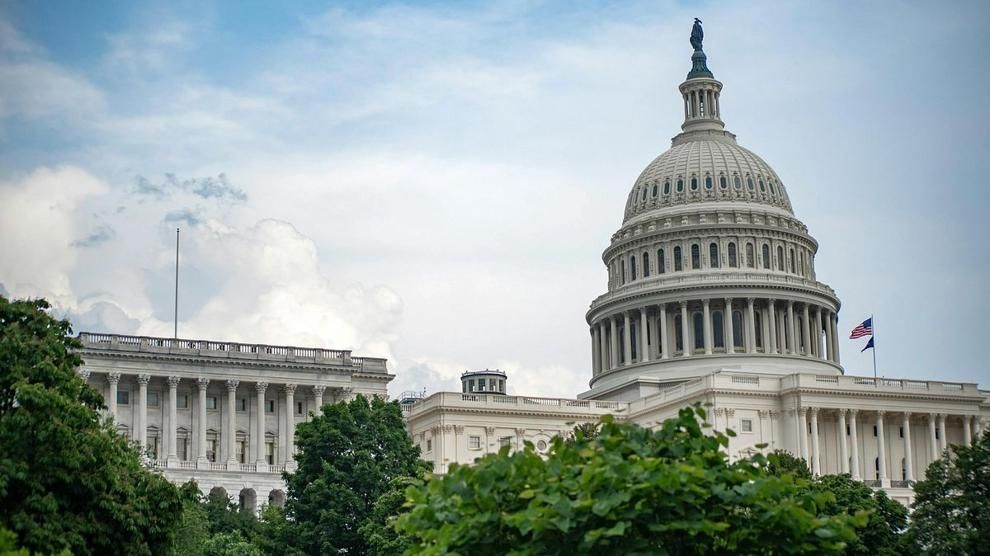
As the 2026 midterm elections approach, a record wave of congressional retirements—38 in the House (16 Democrats and 22 Republicans) and 8 in the Senate (4 Democrats and 4 Republicans)—is reshaping the landscape for control of both chambers, with Republicans defending slim majorities amid strategic shifts and redistricting battles. The 46 total announcements, surpassing the 2018 cycle's pace, include 20 full retirements from public office and 26 incumbents seeking higher roles, creating 32 open House seats and 8 Senate vacancies that could tip balances in a narrowly divided Congress.
In the House, where Republicans hold a 220-215 edge following the 2024 elections, the 22 GOP retirements outnumber Democrats' 16, exposing vulnerabilities in safe districts and battlegrounds. Key departures include Rep. Nancy Pelosi (D-Calif.), retiring after 38 years at 85, opening a solidly Democratic San Francisco seat; Rep. Don Bacon (R-Neb.), whose Omaha district (R+6) becomes a toss-up without him; and Rep. Angie Craig (D-Minn.), running for Senate in a D+3 seat now targeted by the NRCC. Republicans face risks in Florida's 13th (R+3, Rep. Anna Paulina Luna retiring for governor) and Texas' 13th (R+21, Rep. Ronny Jackson eyeing attorney general), while Democrats defend opens like New York's 19th (D+4, Rep. Josh Riley for Senate). Mid-decade redistricting in states like Texas (adding 5 GOP seats) and California (aiming for 5 Democratic gains) amplifies stakes, with the Cook Political Report rating 35 seats competitive as of November 2025.
Senate dynamics favor Republicans, who defend 22 seats to Democrats' 13, including special elections in Florida (Rep. Ashley Moody interim for Marco Rubio's secretary of state vacancy) and Ohio (J.D. Vance's replacement). Retirements like Sen. Mitch McConnell (R-Ky., R+15) open a safe seat, but Democratic losses in New Hampshire (Sen. Jeanne Shaheen, D+1) and Minnesota (Sen. Tina Smith, D+5) create pickups in Trump-won states. Sens. Thom Tillis (R-N.C., R+3) and Joni Ernst (R-Iowa, R+6) retiring heighten vulnerability, with Democrats eyeing flips in Maine (Sen. Susan Collins, R+5) and North Carolina. The map's R+2 average tilt, per Sabato's Crystal Ball, gives Republicans a firewall, but 7 competitive races could shift the 53-47 GOP majority.
These exits, accelerated by Trump's influence and policy clashes, underscore generational turnover: 40% of retirees are over 70, per Ballotpedia data. For Republicans, holding the House requires defending 15 of 18 competitive seats, while Senate gains of 2-3 could expand their edge to 55-45. Democrats, needing 4 House flips and 4 Senate pickups, face headwinds in redrawn maps and low turnout. With primaries starting March 2026, the cycle promises $2 billion in spending, per OpenSecrets projections, testing party resilience amid Trump's final term.
Like this article