SpaceX Prepares for Starship Flight 10 Amid Iterative Testing Challenges
The launch window opens at 6:30 p.m. Central Time from the company's Starbase facility in southern Texas, with live coverage expected on SpaceX's platforms.
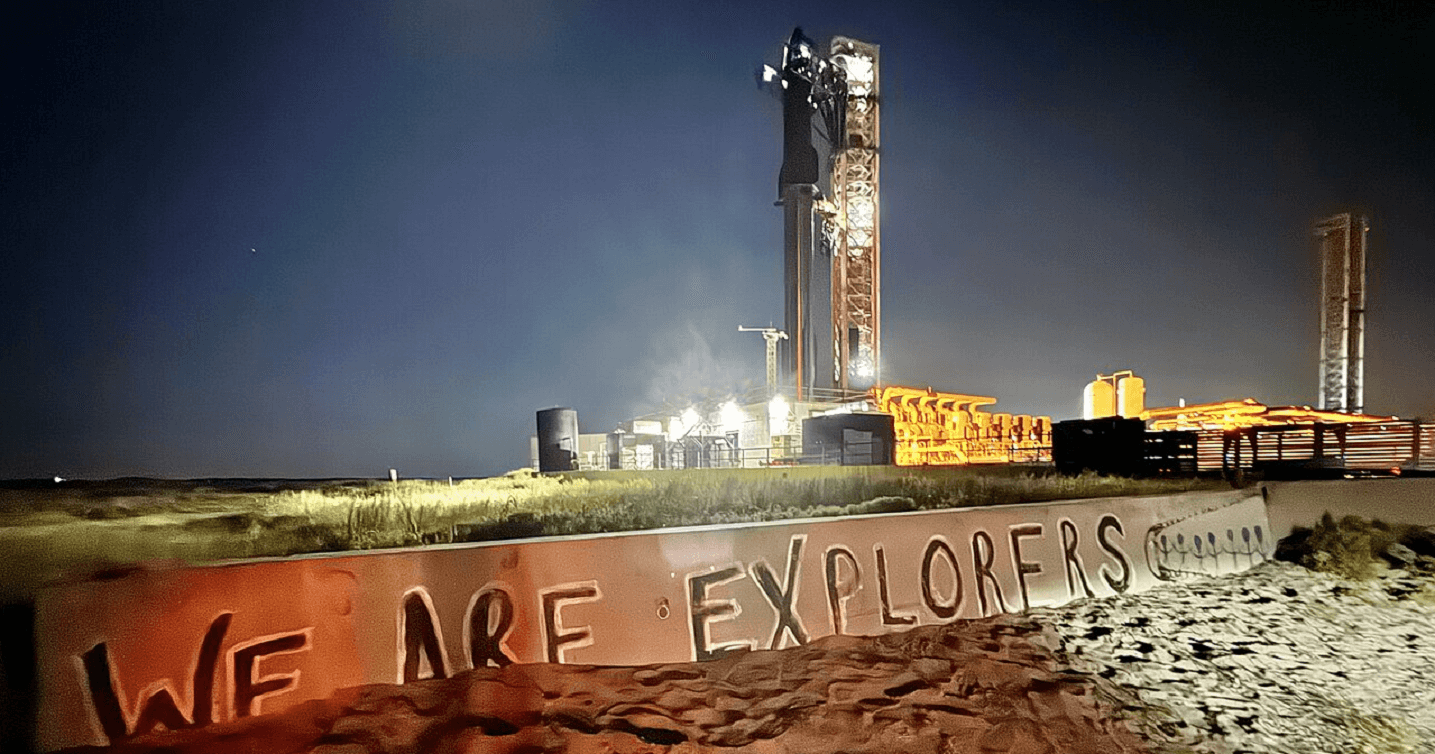
BOCA CHICA, Texas – SpaceX is set to launch its Starship megarocket today, August 24, 2025, marking the tenth test flight of the vehicle designed to revolutionize space travel. The launch window opens at 6:30 p.m. Central Time from the company's Starbase facility in southern Texas, with live coverage expected on SpaceX's platforms.
This mission focuses on expanding the Super Heavy booster's operational envelope through multiple landing burn tests. The booster will attempt a controlled flip after separation, followed by a boostback burn to simulate future profiles that maximize payload capacity. Key experiments include disabling one center engine during landing to test backups, then transitioning to two engines for a full hover above the Gulf of Mexico before shutdown and splashdown. No attempt will be made to catch the booster with the launch tower's mechanical arms.
The upper stage, Ship 37, will undergo trials including the deployment of eight Starlink satellite simulators on a suborbital trajectory, expected to burn up on reentry. A single Raptor engine relight in space is planned to gather data for orbital operations. Reentry tests will stress the vehicle by removing heat shield tiles in vulnerable areas, trialing new metallic tiles with active cooling, and evaluating catch fittings for future tower recoveries. The profile intentionally pushes structural limits on the rear flaps at peak dynamic pressure.
Starship's development traces back to SpaceX's vision of a fully reusable spacecraft capable of carrying humans and cargo to the Moon, Mars, and beyond. Elon Musk founded the program to enable Mars colonization, while NASA has selected a variant as the lunar lander for its Artemis program to return astronauts to the Moon. The overarching goals include achieving rapid reusability at low cost, in-orbit refueling for deep-space missions, and eventually phasing out existing rockets like Falcon 9.
The program embodies SpaceX's "fail fast, learn fast" approach, which has driven successes with the Falcon family but highlights the complexities of scaling to Starship's unprecedented size and power. Early flights demonstrated progress in ascent and separation, yet 2025 has seen setbacks: three upper stages exploded during tests—two over the Caribbean and one after reaching space—plus a June ground static fire anomaly. These incidents, while anticipated in aggressive prototyping, have prompted hardware and operational fixes, raising questions about timelines without undermining the iterative process that refines reliability.
If successful, Flight 10 could advance Starship toward operational status, supporting NASA's lunar ambitions and Musk's interplanetary goals. SpaceX continues ramping production at its Starfactory and expanding facilities in Florida, signaling commitment despite the hurdles.
Like this article